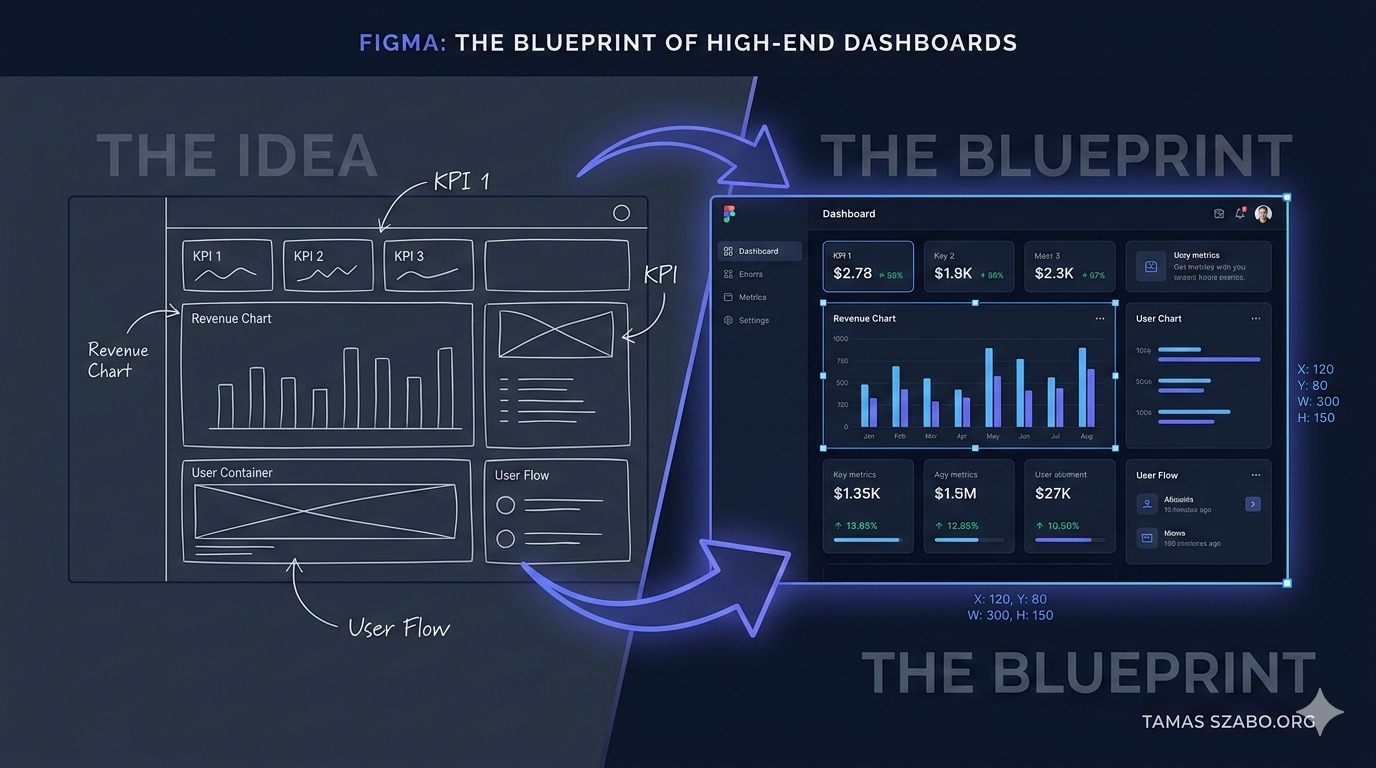
📐 The Analyst’s Toolkit II.
Figma
Most data analysts start with a blank canvas in Tableau or Power BI. They drag a sheet, fight with containers, and hope a professional layout emerges.
The result? Static, “Excel-looking” reports that are hard to navigate and uninspiring to look at. They are functional, but they don’t always inspire confidence or delight the user.
My journey into design-first analytics started during my time at Starschema, where I learned the foundational principles of dashboard UI from my former team lead, Tamas Varga (shout out to him!). That experience shifted my perspective: A dashboard isn’t just a report; it’s a product.
🚀 The Power of Simultaneous Discovery
I don’t wait for a finished design to look at the data, and I don’t wait for finished data to start the design. My process is a dual-track workflow:
- In Tableau: I dive into the raw data. I build ugly exploratory sheets to see what the distributions look like, which charts reveal the insights best, and where the story lies.
- In Figma: Simultaneously, I start sketching the layout. Knowing what charts are possible allows me to design containers that fit the data perfectly rather than trying to squeeze a complex scatterplot into a tiny box later.
This back-and-forth ensures that the final design is both aesthetically pleasing* and **technically feasible.
🛠 The Three Benefits of a Figma Blueprint
1. Performance (The Background Hack)
Tableau slows down when you have dozens of nested containers and images. By designing the UI-borders, headers, and section backgrounds—in Figma and exporting them as a single lightweight background image (I prefer png), Tableau only has to render the actual data. The result: Lightning-fast load times.
2. Brand Consistency and Precision
In Figma, I define a strict Style Tile and layout before building:
- Typography: Clean, readable sans-serif fonts.
- Palette: This is where the magic happens. I source my professional color palettes from Coolors to ensure perfect contrast and mood (but more on that in my next post!).
- Pixel-Perfect Alignment: This is my “secret sauce.” I don’t use loose grids; I use exact, pixel-perfect container positions. Every element has a precise x,y coordinate and width/height. At the end of the day, you have to have a certain level of OCD for alignment to truly excel at this job. It’s the difference between a report and a professional interface.
3. Stakeholder Buy-in: The “Real Data” Hook
Showing a stakeholder a modern, polished product before launch is vital, but showing them their actual sales data in that product is the game-changer. When they see their current numbers beautifully visualized, the conversation shifts from “Does this work?” to “When can we have this?”. It makes the buy-in process effortless.
🏁 Final Thought
By using Figma as my blueprint, I bridge the gap between Data Analysis and Product Design. It allows me to deliver solutions that aren’t just accurate, but are also a joy to use.
Ready to build something together?.